The Covid-19 pandemic heightened people’s awareness of long-standing inequalities within the fashion industry. Amid calls for greater accountability and ethical awareness, efforts are being made within and beyond the industry, chiefly in the cultural and education sectors, to decentralize fashion: to make the conception, creation and consumption of fashionable dress and appearance less ‘western’-centric.
Supporting this premise, Hang-Ups argues that purposeful and permanent change within the fashion industry and fashion education is more likely if it is understood how the contemporary industry became ‘western’-centric. To institute effective change, it is necessary to revert to first principles and understand how the fashion industry developed into what it is today.
During a period when the concepts of fashion, history and culture are being intensely scrutinized, and with suggestions they are reaching their nadir, the imperative to understand the extent to which they relate, and facilitate the presentation of people’s fashionable bodies, is urgent. Hang-Ups explores the origins and consequences of the fashion industry’s ‘western’-centrism by focusing on nine binaries, defined in the crucible of empire, that continue to be sites of negotiation as the ‘west’s’ traditions and ideals are contested by different cultural perspectives and changing global realities.
Reviews
“Sometimes a book comes along that stops you dead in your tracks and makes you think that change is long overdue. Hang-Ups is one of those brave books.” Vicki Karaminas, Massey University, New Zealand
“A thoughtfully researched, carefully crafted and wildly engaging inquiry that is essential reading for all of us in fashion committed to social justice.” Ben Barry, Parsons School of Design, USA
“An important and timely work that belongs on the bookshelves of serious fashion students as well as those involved in the design and promotion of fashion products.” Linda Welters, University of Rhode Island, USA
From West African masquerades to Venetian carnivals and New York society galas, fancy dress has long been used to convey important social and political messages. The only form of clothing that all people, regardless of gender, race, class or sexuality are likely to wear at some point in their lives, fancy dress is a symbol of both escapism and protest; it stands for a vision of fantasy and fun, while also confronting the reality of cultural stereotypes.
Exploring all the allure, playfulness and daring of dressing up, Carnival to Catwalk takes the reader on a fascinating journey through the global history of fancy dress. Drawing on a treasure-trove of textual and visual resources, the book encompasses Halloween festivities and transvestite clubs, Mardi Gras parades and gatherings at Versailles, revealing how fancy dress has long been used to celebrate as well as to disguise individual identity.
Vividly chronicling evidence from the Middle Ages to the modern day, cultural historian Benjamin Wild throws open the historical dressing-up box and demonstrates the enduring appeal of fancy dress, as it becomes an increasingly central part of modern couture and clothing design. Meticulously researched and beautifully illustrated, Carnival to Catwalk is a remarkable resource for scholars, students and costume enthusiasts alike.
Reviews
“… An eloquent overview of a topic that is all too often overlooked in fashion studies. Wild provides thoughtful social, political, and personal connections that underscore the broad significance of fancy dress throughout history and today.” Colleen Hill, Curator of Costume and Accessories, The Museum at FIT, USA
“Wild has made an enormous contribution to the study of dress by bringing fancy dress to the forefront of scholarship. Often considered too frivolous for serious study, Wild demonstrates that fancy dress is a strategy used by people around the world and over time, to make sense of changing times.” Sandra Lee Evenson, University of Idaho, USA
“Benjamin Wild’s transnational study of fancy dress costumes and their sociohistorical contexts is an impressive feat of scholarly synthesis. Wild’s case studies-ranging from royalty to renegades, from playful costumes to purposeful masks-illustrate the enduring mystique and ambivalent cultural value of fancy dress across the centuries.” Colleen McQuillen, University of Southern California, USA
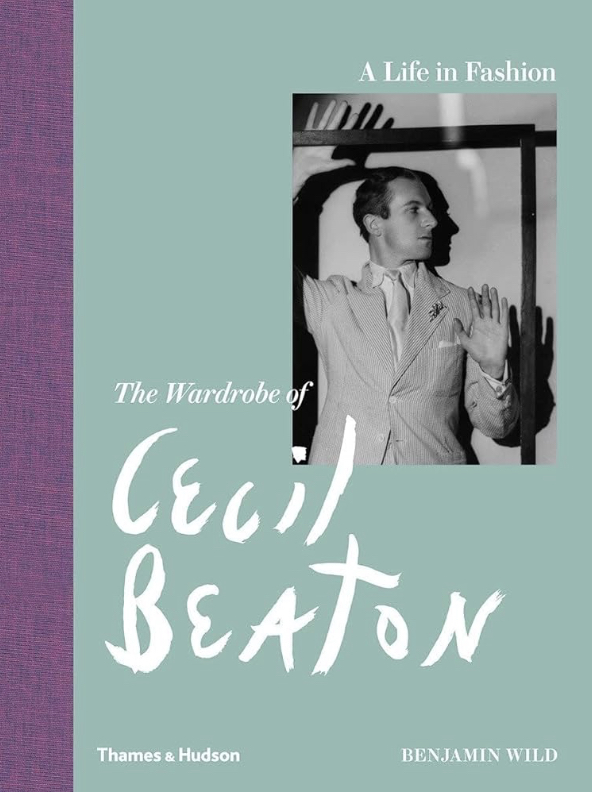
When Cecil Beaton died in 1980, it was not surprising that one of his tailors was telephoned with the news before Buckingham Palace, despite his close association with the Royal Family. From the moment he arrived at Cambridge University in 1922 wearing an evening jacket, red shoes, black-and-white trousers and a large cravat, to his first meeting with Greta Garbo ten years later in ‘pristine white kid coat, sharkskin, and new white shoes and socks’, to his appearance nearly forty years later at Truman Capote’s 1966 Black & White Ball, Beaton expressed a flamboyant sartorial nonchalance – a sprezzatura. Using records from his tailors, unpublished photographs and a close study of Beaton’s surviving clothing in the collections of the Victoria & Albert Museum, London, and the Metropolitan Museum of Art, New York, I to explore Beaton’s carefully curated character from a different angle by studying his ever-changing wardrobe, which reveals new insights into his personal and professional lives.
Reviews
“A fresh fashion read.” MARIE CLAIRE
“Benjamin Wild writes with the verve the subject himself would surely applaud.” WORLD OF INTERIORS
“The first study to chronicle Beaton’s own impeccable style through the decades.” JOCKS & NERDS
“Beaton’s sartorial adventures have been lovingly curated by writer and fashion historian Benjamin Wild in A Life in Fashion, featuring previously unpublished archival material, conversations with Beaton’s former tailors (of which, unsurprisingly, he had many) and a foreword by renowned fashion photographer Tim Walker.” ESQUIRE
“Sheds light on the personal style of the renowned photographer and costume designer”. AESTHETICA
 Dr Benjamin Wild