What follows is the text of a talk I presented at the Annual Conference of the Amsterdam School for Heritage, Memory & Material Culture, ‘A Polyphony of Emotions: Thinking Affect in Heritage, Memory & Material Culture’, (2-4 July).
I want this to be a hopeful talk, but I start with a caveat, a paradox and a warning. The caveat is that I am a historian – more specifically, a medievalist – but for the last six years I have worked in one of the UK’s largest fashion schools. I am trained in a discipline that looks back and employ my learning in relation to an industry that notoriously fetishizes the present and future. If this makes me something of a pilgrim in an unholy land, my fit is even more incongruous because the Middle Ages – still sometimes the Dark Ages – has long been characterised as a time without fashion. Much work has been done to belie this reductionist view, but the bigger task of reconciling history and fashion continues.[i] In his memoir of 2020, André Leon Talley, history graduate and former creative director of American Vogue, explained the ambiguous relationship between history and fashion by invoking the analogy of a shadow. He writes:
‘fashion is not an industry that lives in the past, but rather carries its past along. Like a shadow, wherever it goes.’[ii]
This leads me to the paradox. Fashion, which I define as a belief following sociologists Ingrid Brennikmeyer and Yuniya Kawamura, derives much of its appeal and relevance from its entanglement in the negotiation and expression of people’s identities.[iii] Whether directly or more obliquely, the study of fashion as both cultural product and cultural practice has produced a wealth of qualitative evidence, spanning myriad chronologies, cultures and geographies, that succinctly explains how the clothes people wear have a fundamental role in expressing, sometimes wilfully concealing, fluctuating emotional states. Ann Rosalind Jones and Peter Stallybrass explain how the term to ‘transnature’ was current during the sixteenth-century to explain how clothes ‘“pick up” subjects to mold and shape them both physically and socially, to constitute subjects through their power as material memories’.[v] This is an idea that remains at the core of the fashion industry’s marketing because it has become an axiom of popular discourse, certainly within the ‘west’, that clothes have the capacity to alter their wearer’s emotional states and shift their self-perception, however convincingly and temporarily.
The paradox is that as much as fashion studies has matured into a large interdisciplinary field since the late-twentieth century, its acknowledgement by historians, particularly those engaged in developing the field of the history of emotions over a similar chronology, has remained limited. Rob Boddice has emphasised the important contribution that history makes to the transdisciplinary study of emotions, by altering assumptions and influencing the questions that are posed as much the stake of the answers obtained, he nonetheless suggests that historians have sometimes been reluctant to reach beyond disciplinary boundaries, and this certainly seems be the case for fashion.[vi] This might be a consequence of the fact that initial discussions of fashion, which entered the Oxford English Dictionary in 1568, were largely negative, and often depicted it as something transient and superficial.[vii] To be clear, I am not downplaying the value and significance of historians’ work in the field of dress and textiles, to which I myself have contributed, but given the ubiquity of fashion as cultural practice, I am surprised at its still marginal place within the history of emotions, and in saying this I am aware that my different disciplinary position will shape my vantage point and influence my assessment.
This brings me to the warning and a lecture given by philosopher Bruno Latour at the French Institute, London, in 2011.[viii] In his talk, ‘Waiting for Gaia: Composing the common world through arts and politics’, Latour argued that the scale of the challenges that confront our planet, not least ecological overshoot, stupefy people, for two reasons. First, they seem too vast for us to grapple with. Second, they are too human. The problems that could bring about our species’ demise are the result of social constructs that we have collectively honed to shape the environments we occupy to our needs and desires. In a generalisation that has withstood empirical study, Latour asserted that humans struggle to understand and take responsibility for a guilt they feel about encroaching planetary crisis, but do not think they have caused, at least not singlehandedly. Consequently, Latour claimed there was an urgency:
to bring together all the possible resources to close the gap between the size and scale of the problems we have to face and the set of emotional and cognitive states that we associate with the tasks of answering the call to responsibility without falling into melancholia or denial.[ix]
On the precipice of despair, I now want to turn to hope. I want to suggest that the task of mobilising emotional experiences to foster resilience and reconciliation amid planetary instability can be supported by fashion. This may seem counter-intuitive – blind hope – a consequence of me straying too far from the discipline of history. The fashion industry, which developed in the ‘west’ during the nineteenth century is now one of the world’s largest, and by many metrics one of its most lethal. It employs approximately 12% of the global workforce[x], is responsible for approximately 2% of GDP and perhaps as much as 10% of global carbon emissions.[xi] The fashion industry is undoubtedly a commercial juggernaut and leading culprit in the unfolding crime of ecological overshoot, but as the many qualitative studies that I alluded to attest, it is also more than sum of its trillion-dollar annual revenue.
To use fashion as a resource to close the gap between apathy and action, and to avoid despair – as Latour urges – is complicated, but the task can be facilitated through a closer affinity between the fields of fashion and the history of emotions. More directly, it is necessary to recognise that fashion as cultural practice is often constitutive of dominant social values. Within the ‘west’ and regions influenced by ‘western’ behaviours, the relationship between clothing and emotion has long been used to shape specific narratives, and to create and maintain what William Reddy terms emotional regimes.[xii]
By understanding how fashion has historically moulded and shaped emotional responses that reinforce ‘western’ ideologies, while negating others, there is scope to reappraise and change emotional regimes. I am keen to see – and hopeful about – what this awareness may do to empower people to build collective spaces, institutions, and regenerative facilities that support a more sustainable and inclusive future.[xiii]
To explore this point, I share an example from my recent book, Hang-Ups: Reflections on the Causes and Consequences of Fashion’s ‘Western’-Centrism. The book explores the origins and consequences of the fashion industry’s ‘western’-centrism by focusing on nine binaries, defined in the crucible of empire during the eighteenth and nineteenth centuries, that continue to be sites of negotiation as the ‘west’s’ traditions and ideals are contested by different cultural perspectives and changing global realities. These include, gender, race, sexuality, age and violence; and it is from this last chapter that I take the following example.
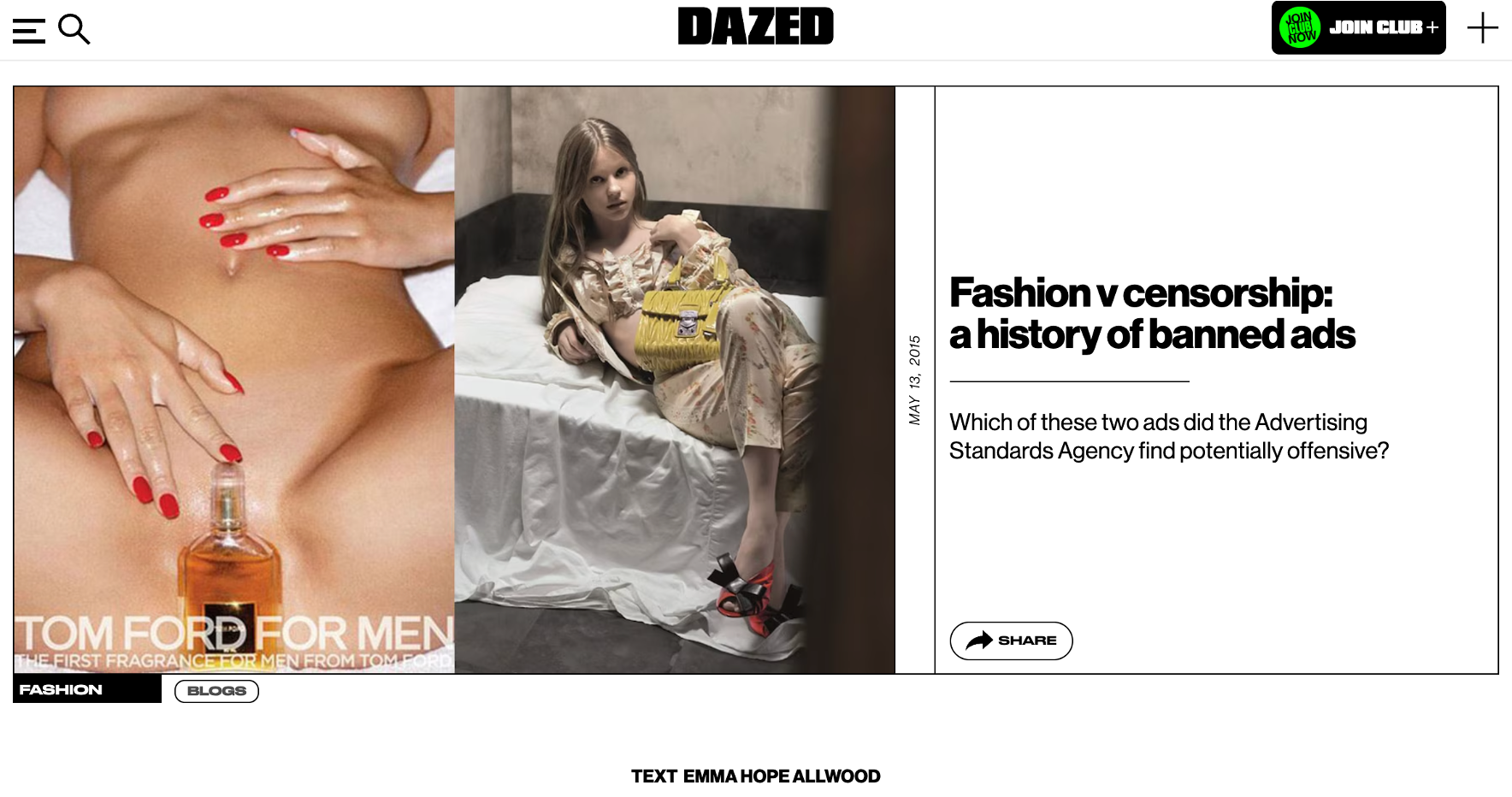
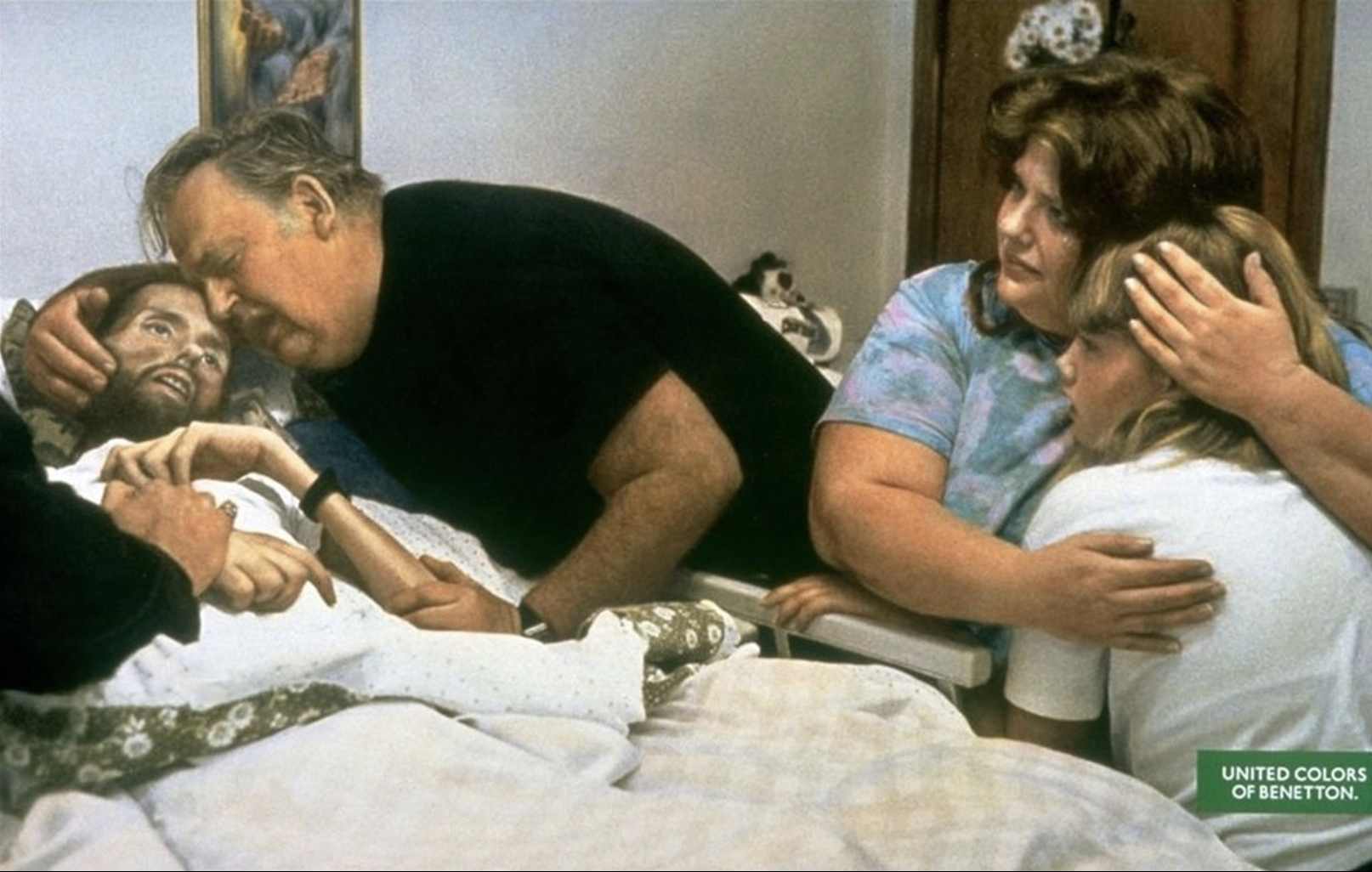
On 13 May 2015, Dazed Digital published an online article titled ‘Fashion v Censorship: A History of Banned Ads’. The article features eighteen campaigns by European-based fashion brands that were reported to the UK’s advertising regulator, between 1992 and 2011. Four of the campaigns had been produced by the United Colors of Benetton. Under the direction of Oliviero Toscani Benetton produced a series of emotionally charged, culturally sensitive and visually arresting advertising campaigns between 1992 and 2000. The first to be mentioned in the Dazed article is from spring/summer 1992 and includes a photograph by Thérèse Frare that depicts the approaching death of David Kirby from AIDS.
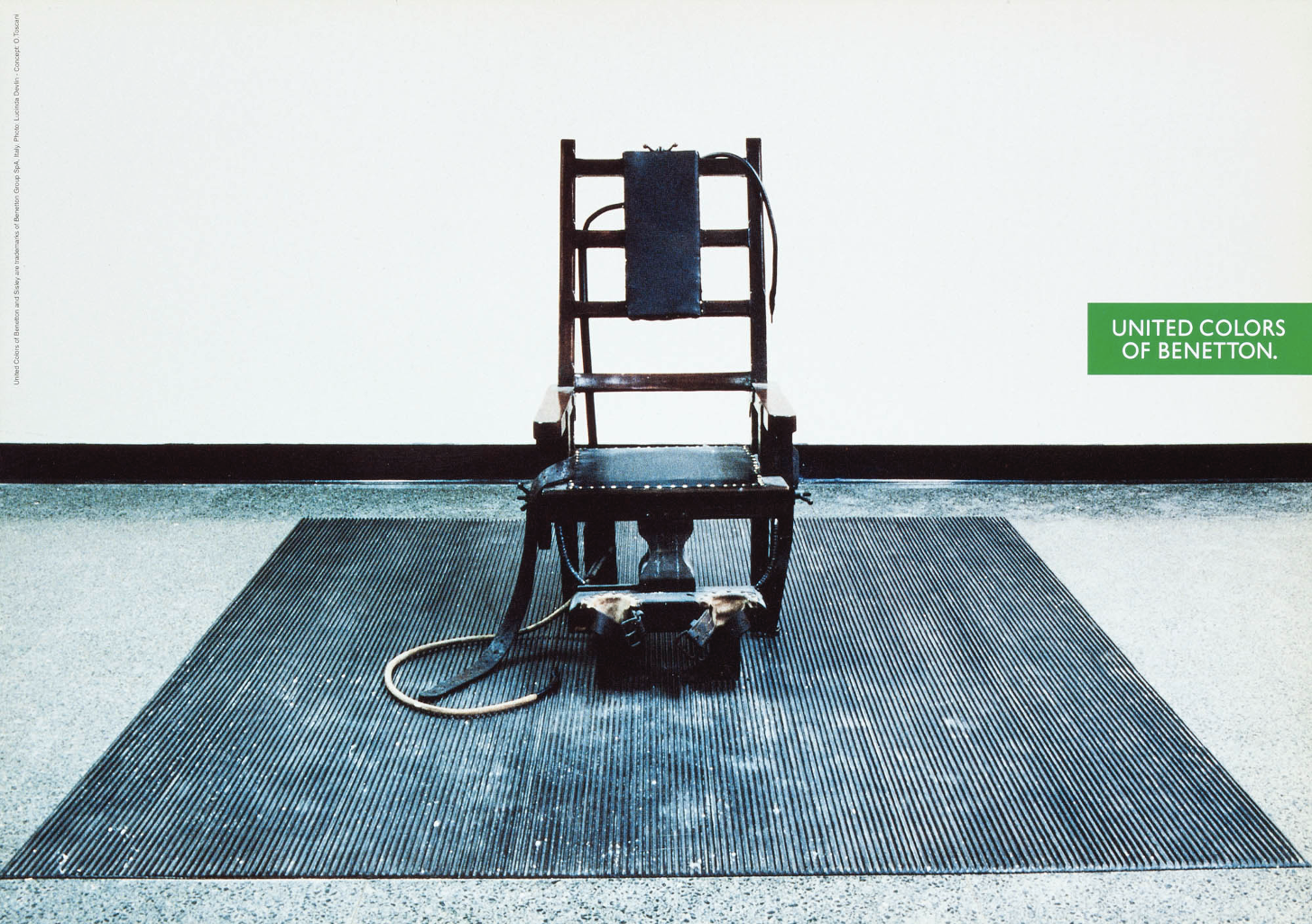
The second image, from autumn/winter 1992, is a photograph of an empty electric chair by Lucinda Dean.
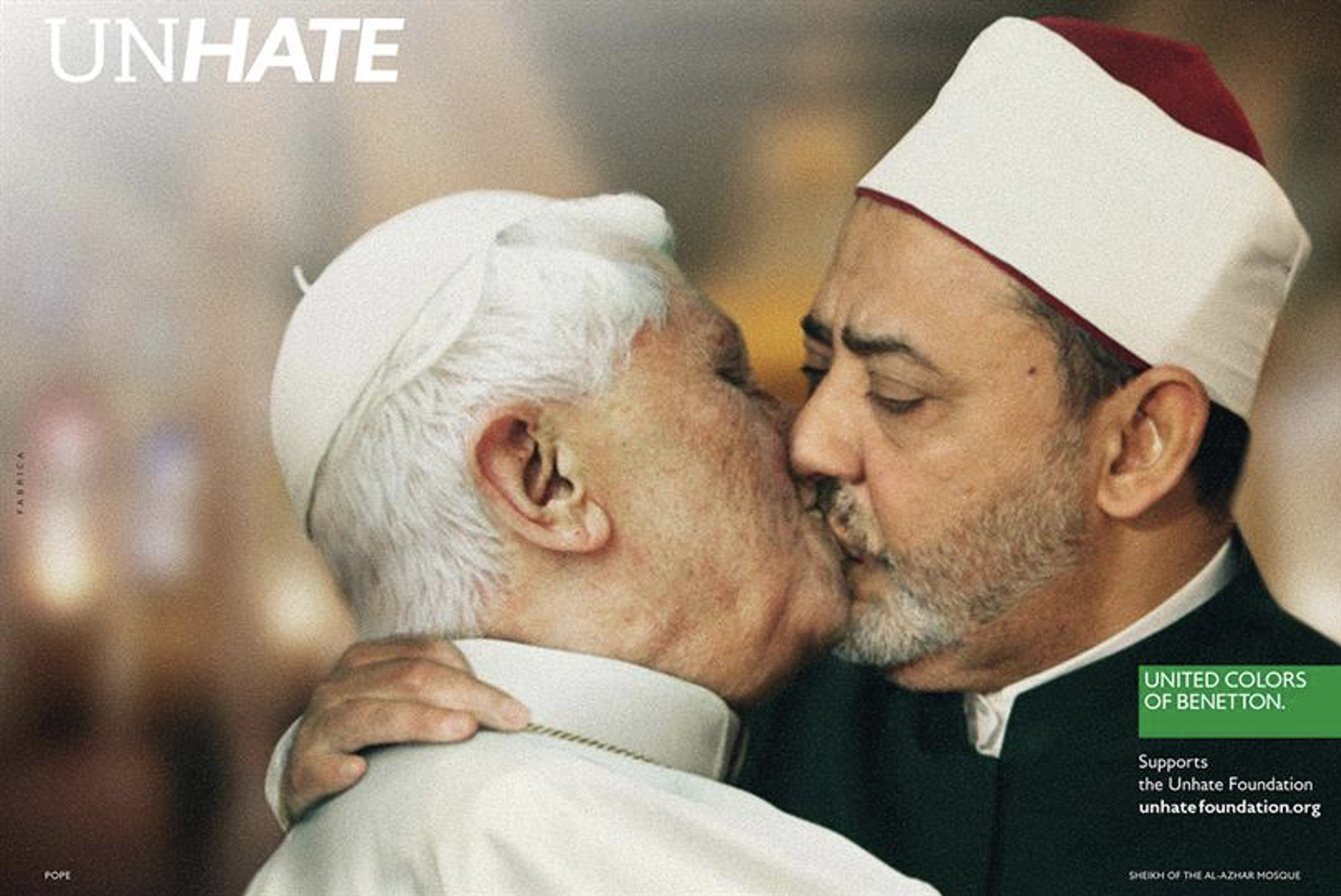
The third image, a composite from the brand’s UNHATE campaign of November 2011, depicts Pope Benedict XVI and Imam Sheik Ahmed el-Tayeb in a kissing pose.
All images and the campaigns to which they relate are genuine. The fourth campaign that features in the Dazed article, apparently from May 2007, is a spoof.
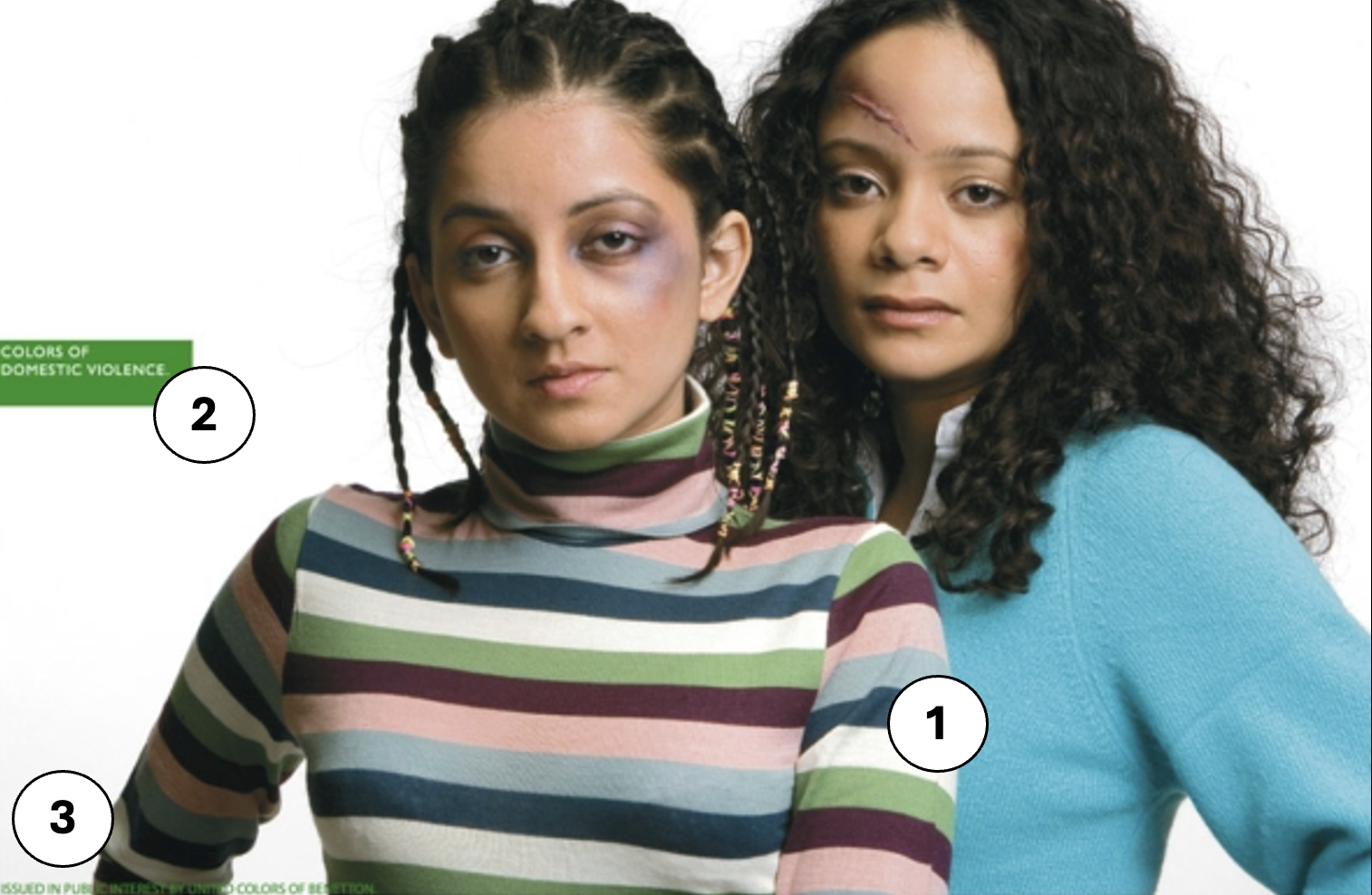
This campaign depicts two brown women with long, wavy dark hair staring directly towards the viewer. Both have facial injuries. The woman on the left has a bruised left eye and cheek; the woman on the left has an inflamed scar above her right eye. The double portrait is presented in the style of Toscani campaigns with a solid white background. Nonetheless, three clues identify it is as anomalous. First, the models wear Benetton clothes. Toscani campaigns are characterized by their lack of explicit fashion imagery. Second, the brand name has been replaced with the text ‘Colors of domestic violence’. The white text in a green box mimics the presentation of the Benetton branding, but in no previous campaign had the company name been removed or altered. Third, the text ‘Issued in public interest by United Colors of Benetton’, does not appear in campaigns issued by the brand.
Upon its release in 2007, the image sparked debate. One blogger claimed to be ‘speechless’ that a brand known to champion ‘a good cause’ was using the topic of domestic violence to sell clothes. The perpetrators of this hoax remain unidentified, and its purpose unclear. Nevertheless, whilst the campaign is unofficial, it raises several issues about the relationship between fashion and emotion and how this informs the industry’s communication.
First, the spoof establishes that the fashion industry is a recognized conduit for communicating culturally relevant topics, albeit with the caveat, based on the extent of the public debate, that sensitive themes are addressed infrequently, and consequently appear tokenistic. Second, the avowedly visual nature of fashion communication means people tend to respond quickly––emotionally––and not always critically to what they see. Three implications follow from this point: spurious campaigns can be deemed legitimate; fashionable items of dress and their associated campaigns typically initiate widespread debate, more especially if they engage with culturally freighted topics, and responses to fashion communication are highly contingent on contemporary cultural themes. The third issue, which is specific to the spoof campaign, is that the fashion industry is not doing enough to use its platforms to raise awareness of domestic violence. Perhaps of greater concern, even with the acknowledgement that the 2007 campaign was unofficial, is that fashion campaigns seeking to raise awareness of social ills tend to compound assumptions that engrain social inequalities. The sole depiction of brown women throughout the fraudulent campaign as sufferers of domestic violence implicitlygalvanizes a message that lawlessness of this nature occurs beyond the ‘west’. Whilst the campaign was illicit, the fact that it was initially received and critiqued as genuine emphasises that people are accustomed to see ‘western’ norms – and emotional expectations – championed by the contemporary fashion industry.
For this, there is much historical precedent. I want to use an example from the sixteenth century, which like the Benetton campaign, was fictitious, but shaped by contemporary mentalities and emotional regimes.
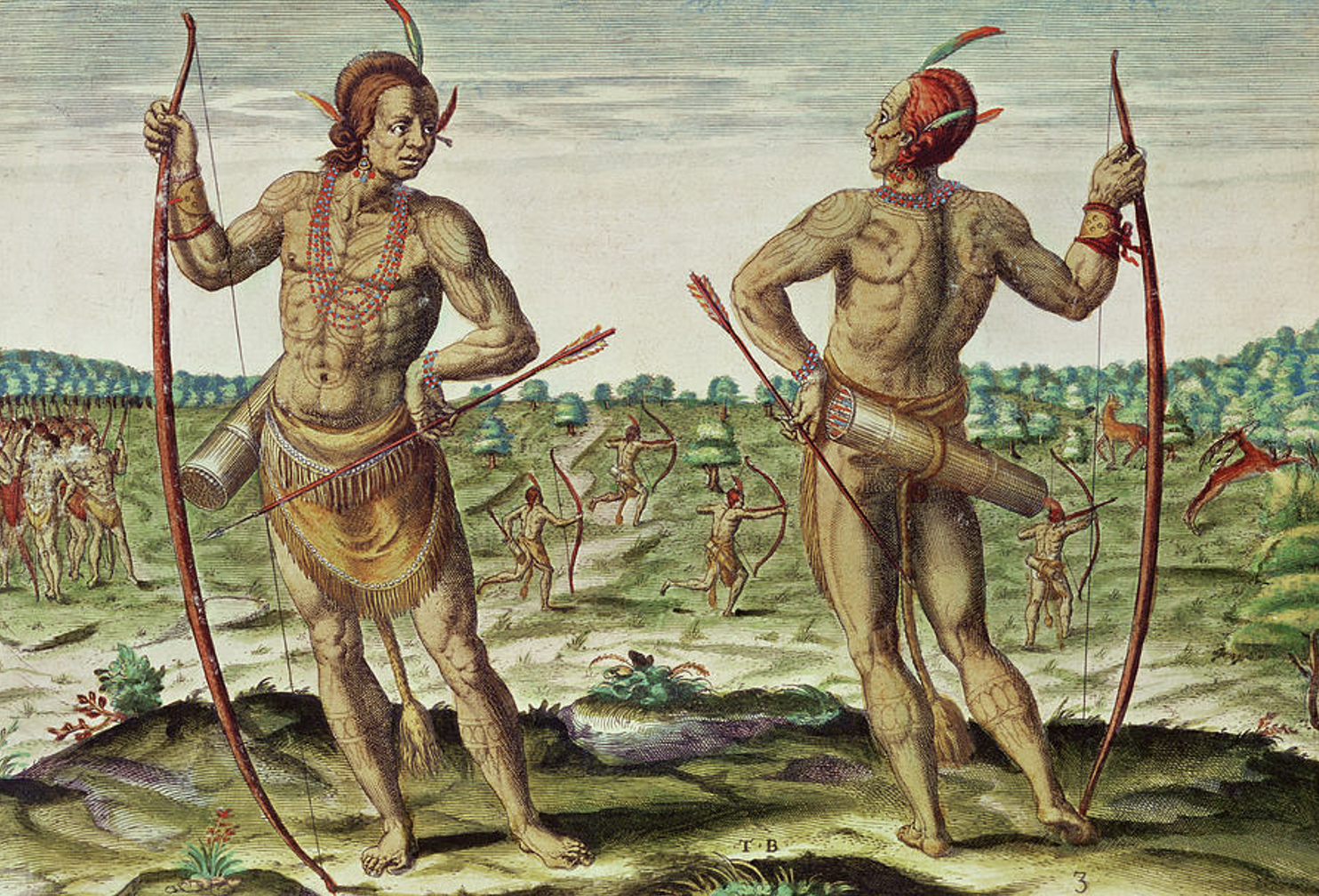
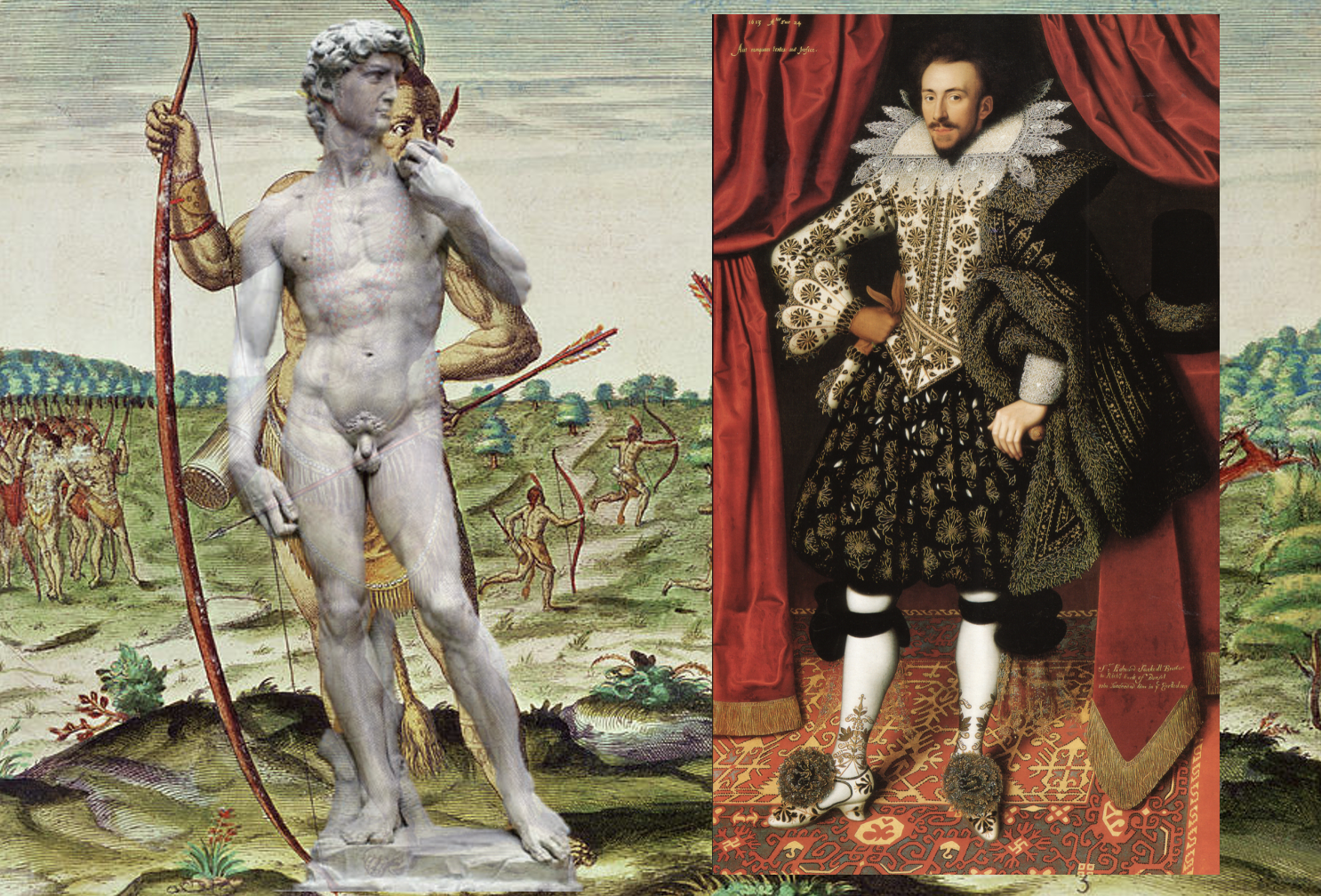
The image is an engraving by Theodor de Bry, titled ‘A Weroan or great Lorde of Virginia’, which appeared as a plate in A Briefe and True Report of the New Found Land of Virginia, published in 1590. Susanna Burghartz has argued that this image, and others like it, show how ‘Europeans employed sometimes surprising narrative and visual strategies involving similarity, otherness and adaptation in order to sketch a reassuring picture of their own superiority’.[xiv] Burghartz’s analysis of the engraving explains how the Weroan’s posture is ‘highly artificial’, including the so-called renaissance elbow that was a characteristic pose ‘borrowed by the programme of figures of European rulers, warriors and soldiers’.[xv] The posture of the warrior is also strikingly similar to that of Michaelangelo’s statue of David, completed eight decades earlier.
In creating this image and others like it, Burghartz suggests European knowledge of clothing and textiles was being used to ‘to classify experiences in alien societies within an already familiar fashion system’, a system ‘that had already proved eminently suitable for Europeans as an ordering concept for their own societies and social distinctions’.[xvi] Separated by four centuries, I would argue that the spoof Benneton campaign relies on similar constructions of knowledge and emotional regimes.
Fashion’s deep entanglement with identity, emotion, and power make it a vital site for critical reflection and meaningful change. By recognising how fashion has historically contributed to shape emotional regimes—particularly those that uphold ‘western’ norms—we open up the possibility of reimagining its role in a more just and sustainable future. Aligning fashion studies with the history of emotions allows us not only to understand how people have felt in and through clothing, but also how we might feel differently. By undertaking this re-fashioning of emotion, I believe we move closer to creating the ‘emotional and cognitive states’ that Latour recognises are fundamental in this moment of planetary precarity. That, I hope, is a positive note on which to end.
[i] Many works can be cited, but see the ongoing series Medieval Clothing and Textiles, eds. R. Netherton, G. Owen-Crocker, et al., vols 1-19 (Woodbridge: Boydell & Brewer, 2005-).
[ii] André Leon Talley, The Chiffon Trenches: A Memoir (London: 4th Estate, 2020), 144.
[iii] Yuniya Kawamura, Fashion-ology: Fashion Studies in the Postmodern Digital Era, third edition (London: Bloomsbury, 2023).
[v] Ann Rosalind Jones and Peter Stallybrass, Renaissance Clothing and the Materials of Memory (Cambridge: Cambridge University Press, 2000), 2.
[vi] Rob Boddice, The History of Emotions, second edition (Manchester University Press, 2023).
[vii] Jones and Stallybrass, Renaissance Clothing and the Materials of Memory, 1.
[viii] Bruno, Latour, ‘Waiting for Gaia: Composing the common world through arts and politics’, lecture at the French Institute, London (2011). http://www.bruno-latour.fr/sites/default/files/124-GAIA-LONDON-SPEAP_0.pdf
[ix] Ibid.
[x] https://www.uniformmarket.com/statistics/global-apparel-industry-statistics#:~:text=The%20Fashion%20industry%20employs%2011.9,and%20logistics%20work%20among%20others.
[xi] https://science.feedback.org/review/the-clothing-industry-produces-3-to-10-of-global-greenhouse-gas-emissions-as-accurately-claimed-in-patagonia-post/#:~:text=Some%20sources%2C%20including%20the%20Ellen%20MacArthur%20Foundation,to%2010%20percent%20of%20global%20carbon%20emissions.
[xii] William M. Reddy, The Navigation of Feeling: A Framework for the History of Emotions (Cambridge: Cambridge University Press, 2001).
[xiii] Zehra Zaidi & Indy Johar, ‘Position Paper for the Planetary Civics Inquiry: A New
Framework for Planetary Futures’ (Planetary Civics 2025). https://cdn.prod.website-files.com/668400197070c499d03bb489/67124296cf139c5400cf85d8_PCI_PositionPaper_A%20New%20Framework%20for%20Planetary%20Futures%20(2).pdf
[xiv] S. Burghartz, ‘The Fabric of Early Globalization: Skin, fur and cloth in dr Bry’s travel accounts, 1590-1630’, Dressing Global Bodies: The Political Power of Dress in World History, ed. B. Lemire and G. Riello (London: Routledge, 2020), 16.
[xv] Ibid., 19.
[xvi] Ibid., 38.

